
HOW TO CHECK CASTER ON A CIRCLE TRACK CAR WITH A DIGITAL LEVEL
Read caster straight off the spindle with a digital level and a fixture. Eight steps, what to zero, and how to know the reading is right.
You do not need a bubble caster gauge or a caster sweep to read caster. A digital level on a fixture that seats over the spindle knuckle reads it directly, in one shot, with the wheel straight. This is how I read it on my car.
WHAT YOU NEED
- The spindle mount caster tool. It is a printed fixture that fits Speedway 3-piece spindles. It is not a gauge on its own.
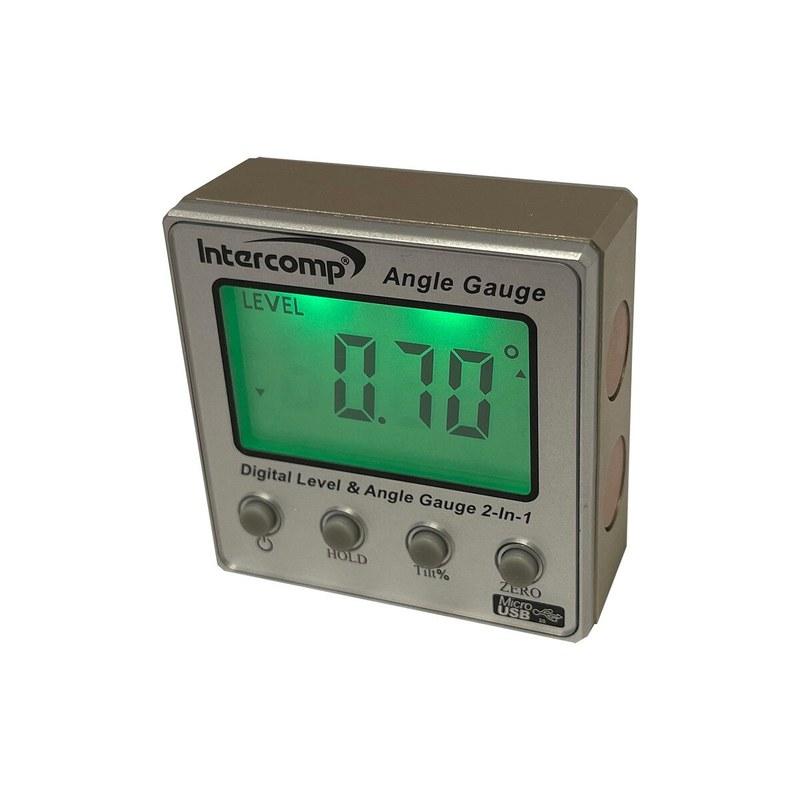
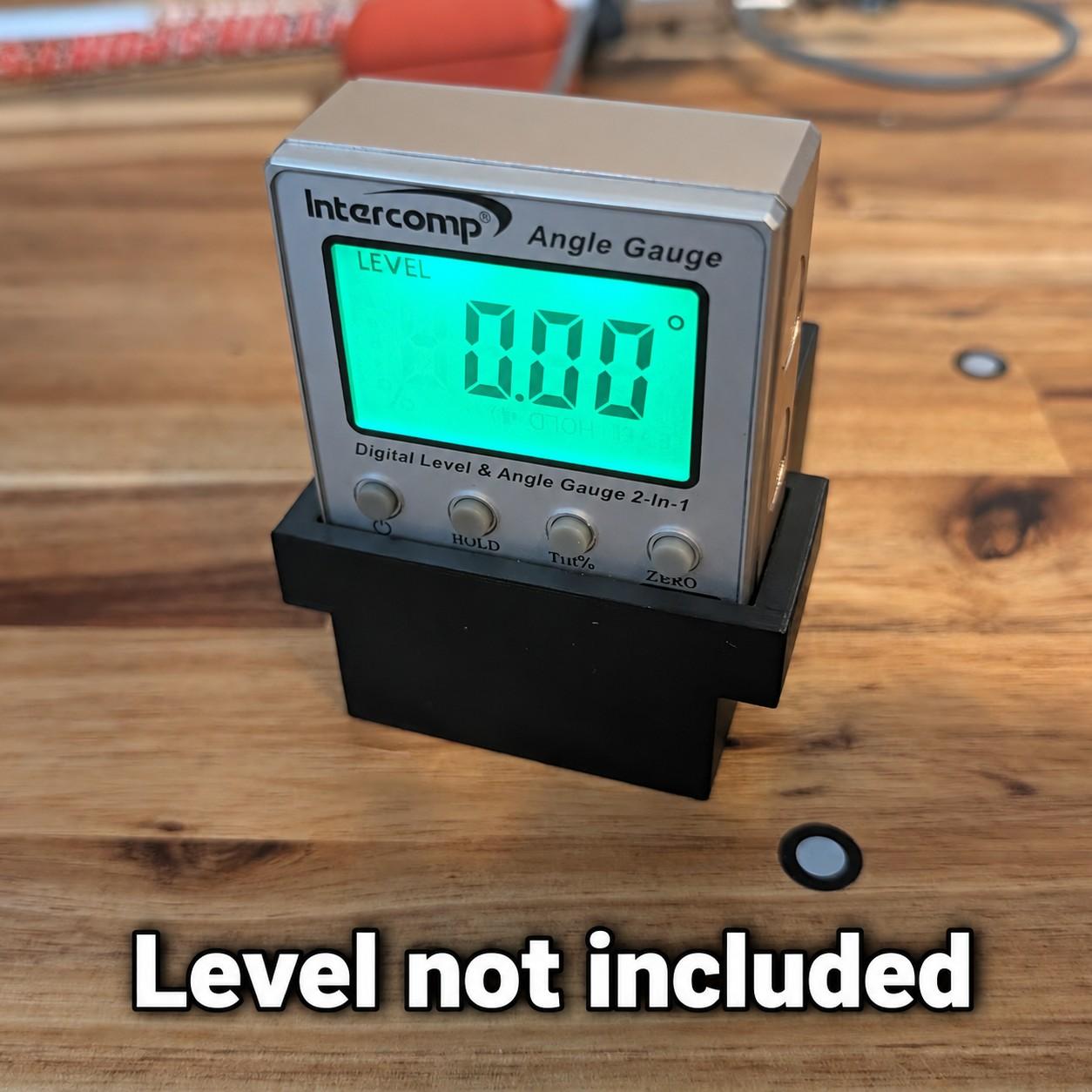
- A digital level, sold separately. I use the Intercomp 102144 because it reads the same in both directions. Any digital level works if you check it first, see step 7.
- Setup plates, or a flat floor you trust.
THE STEPS
- 1Put the car on setup plates, loaded, dead flat. If the fronts are on turn plates and the rears are on the ground, the car is nose-up and every reading comes out about 0.6° high. Flat or correct for it.
- 2Point the tire you are measuring straight ahead, parallel to the frame rail. Check the tire, not the steering wheel. On setup plates you cannot swing the wheel with weight on it, so jack the car, turn the wheel, and set it back down.
- 3Zero the level on the ground directly below the wheel before every reading.
- 4Set the fixture down over the spindle knuckle and slide it all the way back until the pocket bottoms out. It should go on by hand. If it needs force it is not back far enough. Pull it off and start again rather than pushing on it.
- 5Set the level on the fixture and read caster.
- 6With the Intercomp, one reading is enough. It reads the same in both directions.
- 7Using a different digital level? Do the flip test first: set it on a level surface, read it, turn it 180°, read again. My DXL360 read 0.0 one way and 0.6 the other, which is a constant 0.3° baked into every single-direction reading. Subtract the offset, or read both ways and average.
- 8Lift the fixture off and seat it again. The reading should repeat within about a tenth of a degree.
WHAT THAT LOOKS LIKE
Slide the fixture down over the spindle knuckle until the pocket bottoms out. It goes on by hand.
Drawn, not to scale. The 0.45° is the left front on my car, flat on setup plates.
HOW CLOSE IT READS
On my car the fixture reads within 0.2° of a bubble caster gauge on four paired checks, repeats within about 0.1° when you lift it off and seat it again, and one printed tool reads within 0.2° of another. The paired numbers are in bubble gauge vs. digital level: the numbers.
Two things throw the reading more than anything about the tool: the car not being flat, and the wheel not being straight. Both are covered in why the car has to be flat and the wheel straight.
THE TOOL
MORE
- Bubble caster gauge vs. a digital level on the spindle: the numbersSame corner, same condition, read with a bubble caster gauge and with a digital level on a spindle fixture. Four paired checks, all within 0.2°.
- Check your digital level before you trust it: the flip testA digital level can carry a constant offset in one direction. Thirty seconds on a flat surface tells you whether yours does and how big it is.
- Reading caster: why the car has to be flat and the wheel straightTurn plates under the fronts with the rears on the ground add about 0.6° to every caster reading. A wheel turned off straight adds more. Here is why, with the numbers.
- What caster is on a circle track car, and how to read what you haveCaster in plain terms: what the angle is, what more of it does, why the two fronts are not the same, and how to measure yours without a caster sweep.
- Running a real circle track wheel on a sim baseWhich sim bases take a 3-bolt circle track wheel through a 70 mm adapter straight on, which need a universal hub, and how it bolts up.
- Putting an 18-inch truck steering wheel on a sim baseTwo adapters for the 18-inch Freightliner-style wheel: one for 70 mm quick releases, one for Logitech G27 and G29. Which one you need and what is in the box.